Castlevania: Belmont's Curse is a 2D action-exploration game. Konami's own description is short: it is set 23 years after Castlevania III: Dracula's Curse, it depicts the growth of Rose Belmont, and it moves faster and more fluidly than earlier entries in the series. Everything below is an expansion of those four systems.
The whip is a movement tool first
The headline change is the whip. Konami's description is unusually direct about it: the series' iconic whip action is "more satisfying than ever", you crack it to move around freely like a trapeze artist, and mastering the whip mechanics lets you pounce on enemies like a wolf.
In practice, that means the whip is your positioning and approach tool rather than a straight damage dealer. If you swing to a grapple point, close the distance, and press attack mid-pull, you get a grapple attack that differs depending on the weapon you have equipped. The whip itself is not doing the damage in that exchange, your weapon is.
That design decision is the source of the single most common early complaint about the demo, which is that it does not feel like the whip-forward Castlevania people remember. It is not missing; it is doing a different job. The whip page goes into the mechanic in detail.
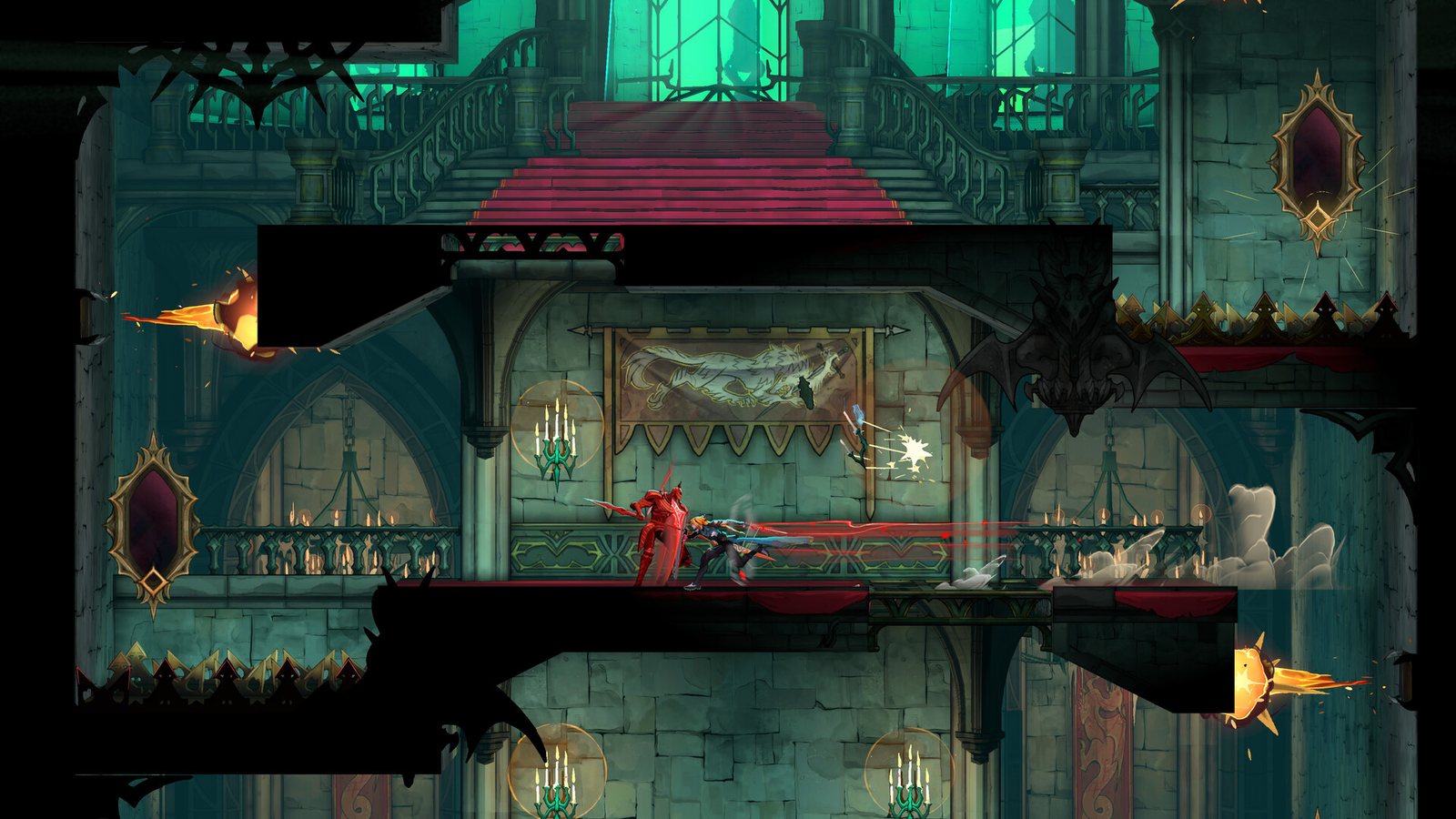
Weapons: seven categories
Konami's wording is that weapons span seven distinct categories, and it stops there. The official list of those categories has never been published, on the product page, on the store listing or anywhere else we could find.
What has been shown in hands-on previews covers four of them:
Long sword, whose grapple can pierce through a target and keep your momentum. Cestus, whose grapple attack is a rising uppercut. Great sword, whose grapple becomes a wide charging spin. Whip-type weapons, which sit in their own category rather than standing in for all of them.
The remaining three categories are unpublished. The weapons page keeps the confirmed four and the gap separate, and it says plainly which is which.
Relics: three slots, hard choices
Relics trigger powerful effects through both offense and defense, and you can carry up to three at a time. That number is the interesting part: it is small enough that the choice is real, and hands-on coverage describes the best relics as rewards for genuinely difficult optional content, the kind of platforming sequence or long fight you walk past because it looks like a mistake to attempt.
Relics sit alongside your weapon rather than replacing it, so a build is a weapon plus up to three relics plus whatever Arcana abilities you have earned.
Arcana: bosses become abilities
This is the system that ties progression to the boss list. When you defeat a boss, it is sealed into one of Rose's tarot cards and becomes an Arcana. Each Arcana grants skills you cast and unique special actions you can perform, which means boss fights are not just gates but the main source of new abilities.
Three boss-to-ability mappings have been described in preview coverage:
| Boss | Arcana ability described in previews |
|---|---|
| The Fallen | A spinning holy cross projectile |
| Joan of Arc | A ground explosion |
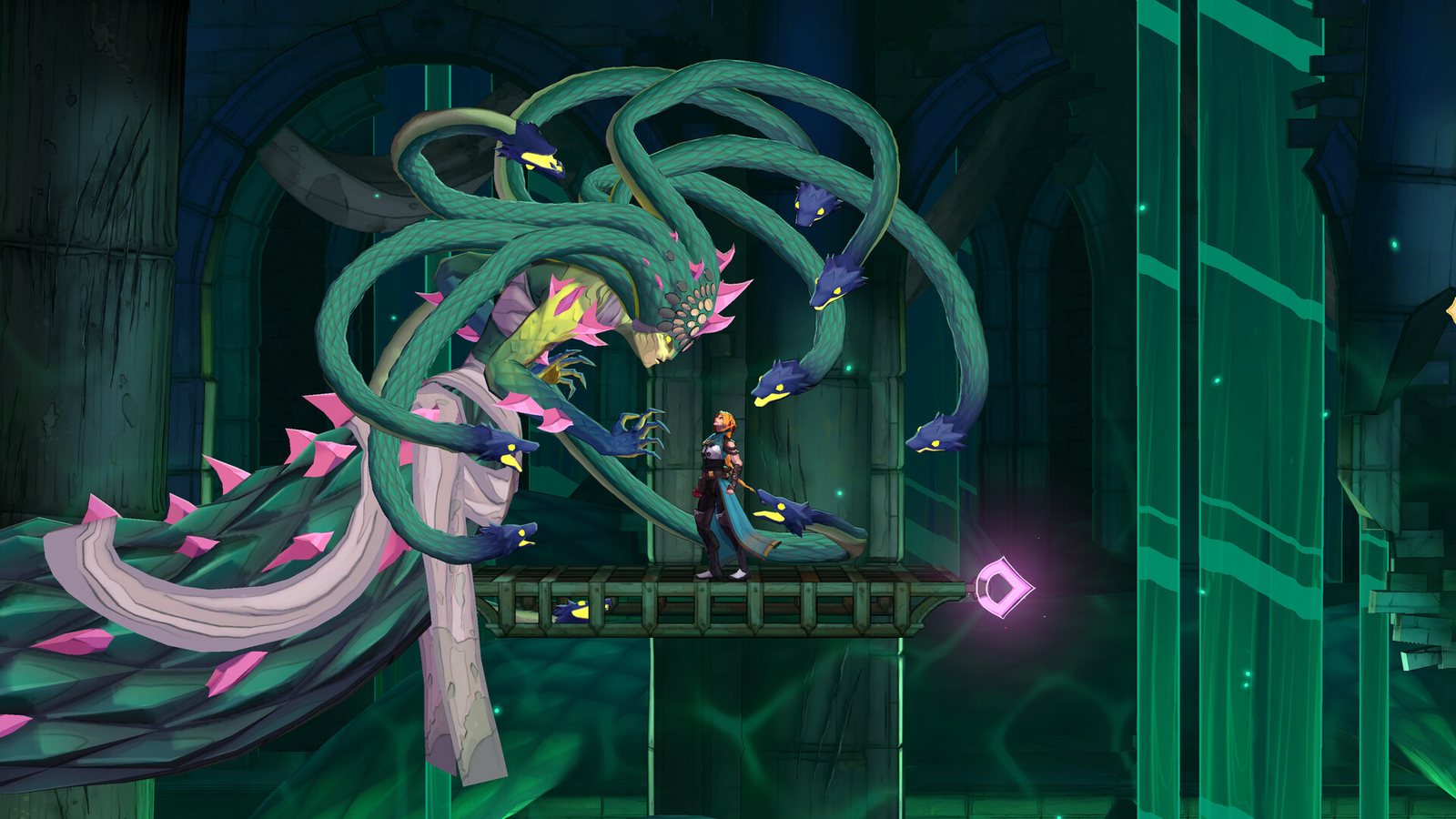
| Medusa | A petrification beam |
Preview coverage also describes a Works of Mercy system, which works like a set of challenges: complete one and you earn points you can spend upgrading the matching Arcana. Konami has never mentioned the name, so it is documented here as a preview-reported system rather than an official one. The Arcana page has the full picture, including the older Castlevania systems this one resembles.
The genre question
Three labels get applied to this game constantly, and Konami uses none of them.
Metroidvania. The official genre is 2D Action-Exploration. That phrase and "metroidvania" overlap in spirit but they are not the same claim, and the official term is the one to use. Roguelike. There is no run structure, no permadeath loop and no procedural generation described. Evil Empire's previous work is why the label gets attached, not anything Konami has said. * Soulslike. No stamina system, no bonfire structure and no death penalty have been described.
The same goes for the idea that this is Dead Cells with a Castlevania skin. Evil Empire develops it, and Motion Twin, who made Dead Cells, is credited in an advisory role. They are separate games with separate systems. The series background page covers what the developers say they drew on instead, which is three specific Castlevania titles rather than a roguelike.
Setting and structure
Konami describes maps that combine new features with elements familiar from classic Castlevania titles, under a gothic art direction rebuilt with more detailed visuals. The published material does not describe a level count, a map size, a save system or a difficulty setting list, so this page does not either. If you want to see the structure rather than read about it, the trailers page indexes the official footage, and the demo is the first chapter playable today.
FAQ
Is Belmont's Curse a metroidvania?
Konami's official genre is 2D Action-Exploration. That is the term the game's own materials use.
Is it a roguelike?
No. There is no run-based structure, no permadeath loop and no procedural generation in anything Konami has described.
How many weapons are in the game?
Weapons span seven distinct categories according to Konami, but the list of categories has never been published. Four have been shown in previews: long sword, cestus, great sword and whip-type.
How many relics can I equip at once?
Up to three, with more than three available, so the loadout is a choice rather than a collection.
How do I get new abilities?
By defeating bosses. Each one is sealed into a tarot card and becomes an Arcana that grants spell-like skills and special actions.